
What not to do after a tooth extraction: the most common mistakes

What not to do after a tooth extraction: the most common mistakes
A tooth extraction is a small surgical procedure, and the first days matter. Small missteps can interfere with healing, so it helps to know what to avoid.
Your main goal is to protect the blood clot in the socket. It is a natural plug that covers the wound and supports healing.
If you are reading this on your phone and feeling stressed, that is normal. Give it three minutes and you will feel calmer.
Most common mistake #1: active rinsing
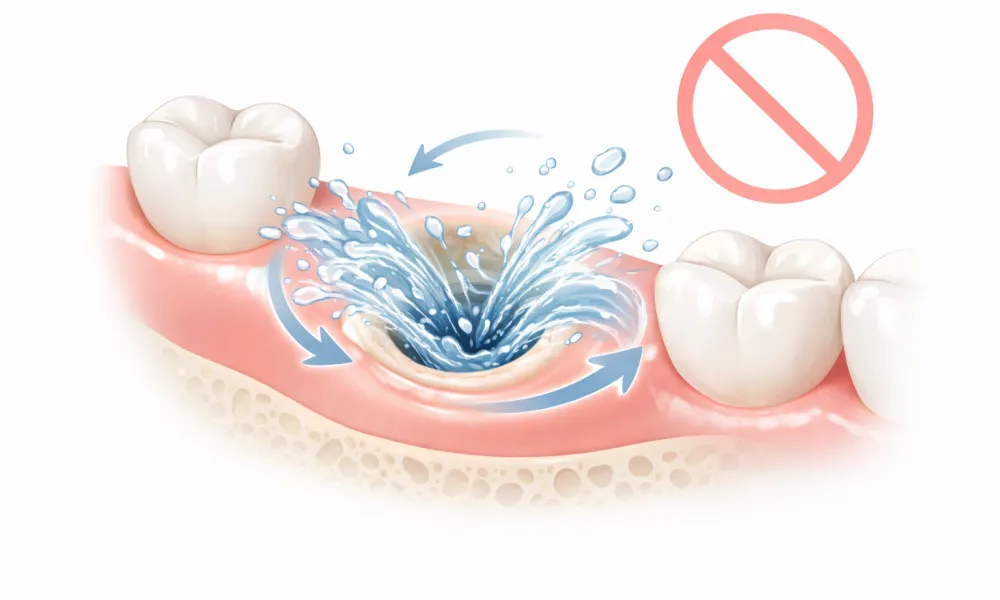
What people do: vigorous rinsing to keep it clean. Why to avoid it: strong rinsing can wash out the clot. What to do instead: if your dentist prescribed a solution, do gentle hold-and-release rinses. Keep the liquid in your mouth for 20-30 seconds without swishing. Otherwise, just maintain careful hygiene around the area.
Mistake #2: touching the socket with your tongue, fingers, or a toothpick
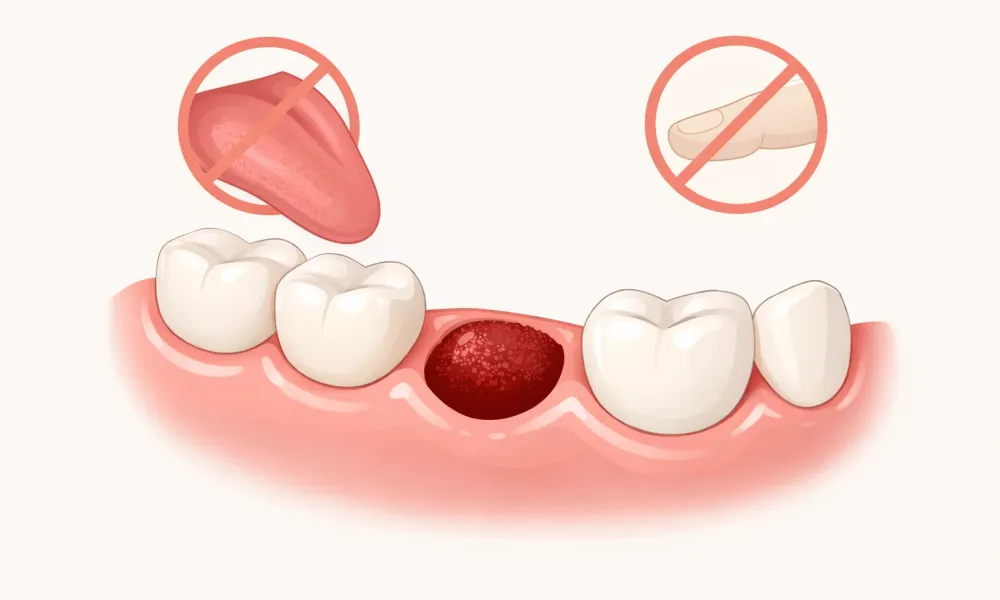
This slows healing and increases the risk of inflammation. The socket does not need to feel normal right away, and that is expected.
If something feels stuck or uncomfortable, choose soft food and clean around the area gently. If it keeps bothering you, contact us rather than poking the socket yourself.
Mistake #3: smoking or vaping
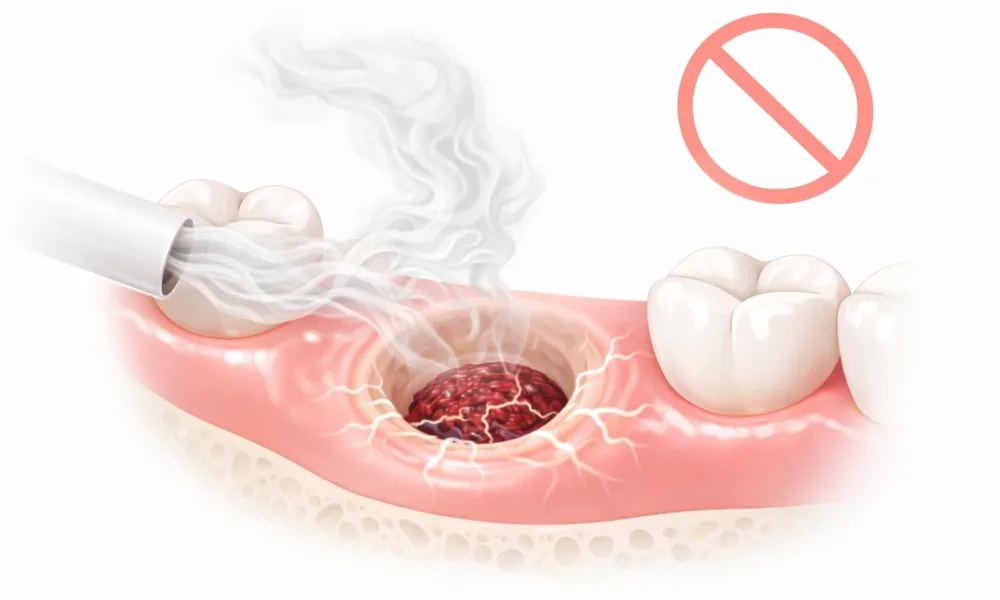
Smoking narrows blood vessels and creates a suction effect that can disrupt the clot. This raises the risk of dry socket, a condition where the clot breaks down and pain increases.
Recommendation: avoid for at least 48-72 hours, ideally 5-7 days. If you slipped, do not blame yourself. Avoid other risks and watch symptoms. If pain increases or there is a bad taste or smell, reach out.
Mistake #4: hot food and alcohol in the first 24 hours
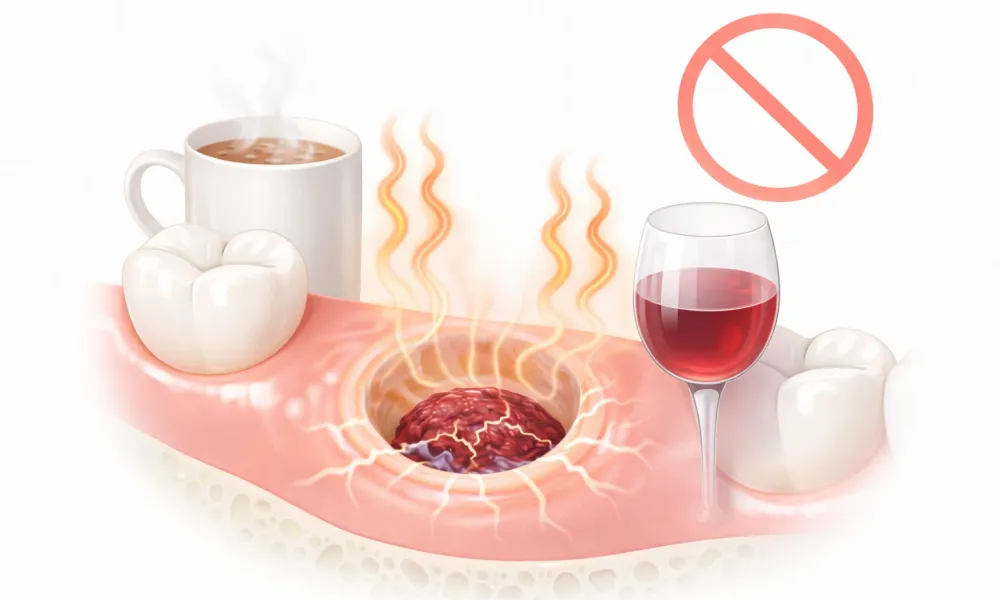
Heat and alcohol expand blood vessels and can increase bleeding and swelling. That is especially important on day one.
Choose cool water and soft, warm (not hot) food once the time is right, and avoid crumbly foods.
Mistake #5: exercise, sauna, hot baths
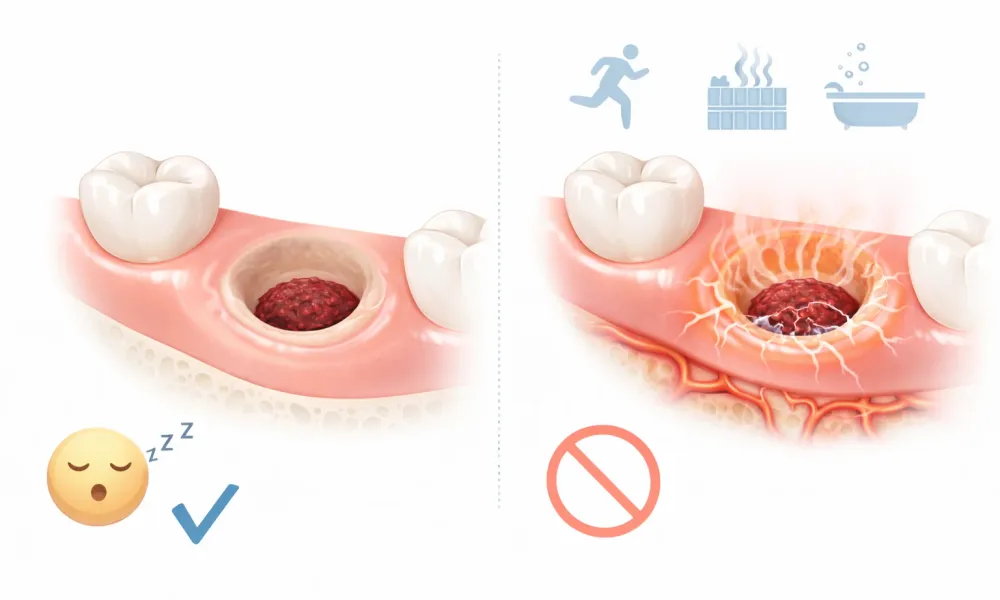
Physical strain and heat boost blood flow, which can trigger swelling or bleeding. It is best to avoid these for 2-3 days or follow your dentist's specific instructions.
Mistake #6: applying heat to the cheek
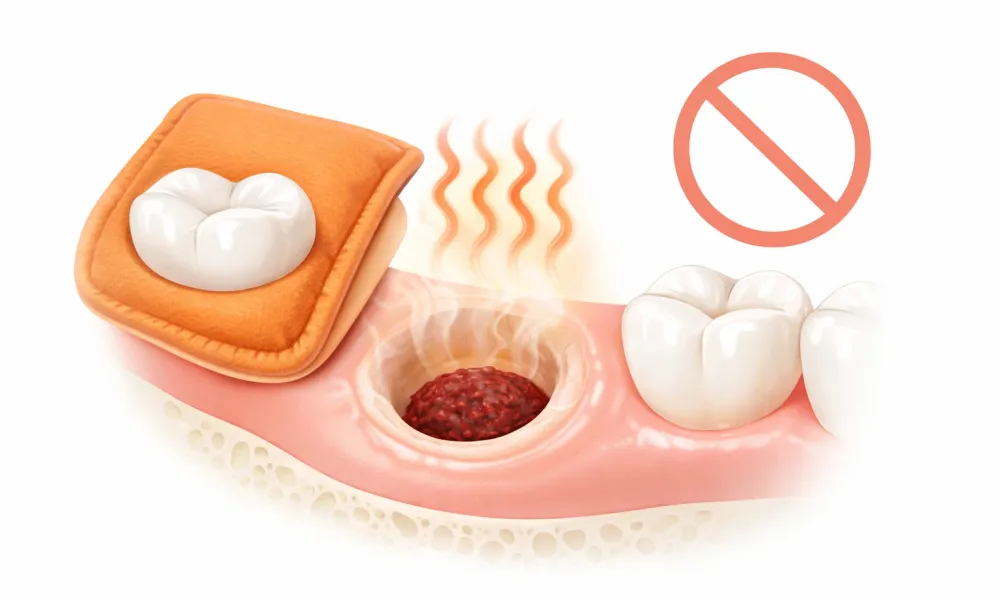
Heat can worsen swelling. For the first hours, use cold through fabric: 10-15 minutes on, 10-15 minutes off, during the first 6-8 hours (unless your dentist says otherwise).
Mistake #7: using an irrigator or strong water stream
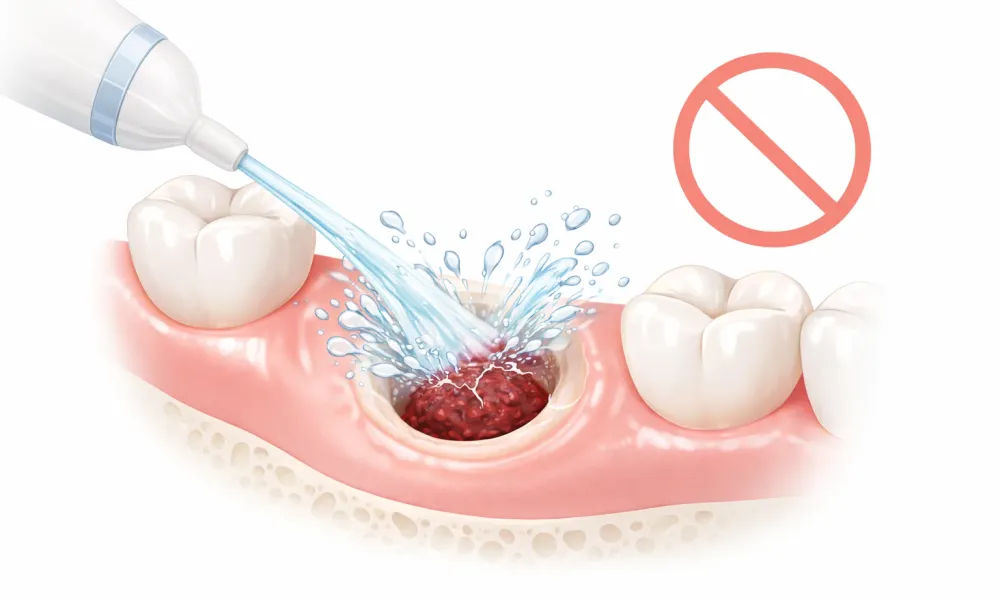
Avoid irrigators near the socket during the first days. Strong water pressure can disturb the clot.
When to resume is individual. A safe guide is 7-10 days or after a check-up. If in doubt, ask your dentist.
Mistake #8: putting medications into the socket yourself
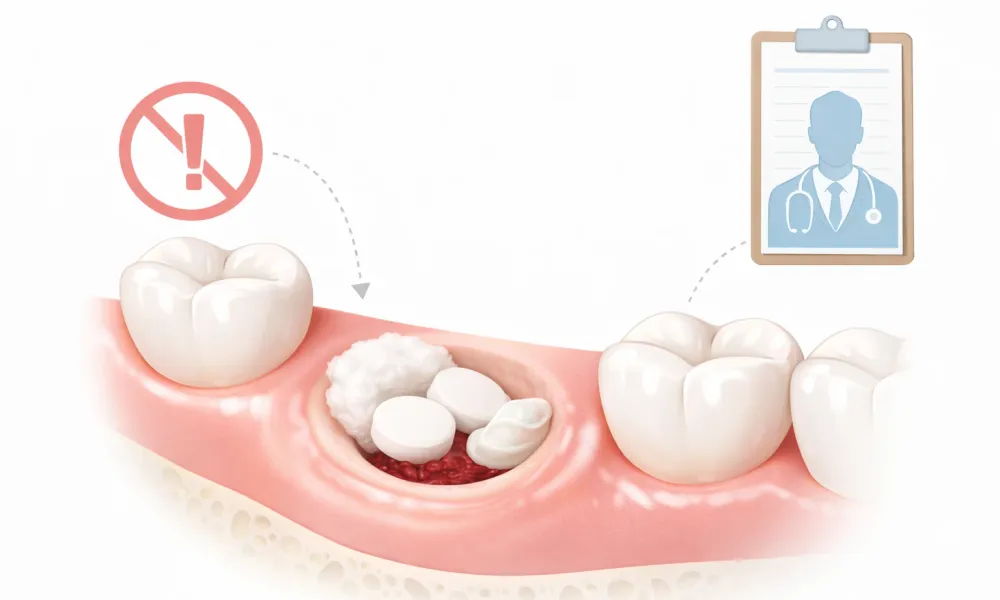
Placing substances into the socket can irritate tissue or dislodge the clot. Only use what your dentist prescribed and only in the way explained.
If you already broke a rule, what to do
In most cases, everything will still be okay. A calm plan helps reduce anxiety.
1. Remove the risk factor
Stop whatever could interfere with healing and return to a gentle routine.
2. Observe how you feel
Listen to your body and avoid extra strain over the next 24 hours.
3. Check red flags
- bleeding longer than 3 hours
- pain that increases on day 2-3
- bad taste or odor
- temperature above 38 C
- swelling that grows after day 3
If any of these appear, contact us.
What you can do to help healing go smoothly
- Rest and a calm routine on day one.
- Soft, warm food at the appropriate time, without crumbs.
- Small sips of water after anesthesia wears off.
- Gentle hygiene around the socket.
- Cold packs in the first hours, if your dentist allows.
- Medications only as prescribed.
Minimum activity, soft foods, gentle hygiene. Your main goal is to protect the clot.
Swelling may peak, and this is normal. Keep a gentle routine and avoid overheating.
Gradually return to your normal routine. If you are unsure, it is always okay to ask.
Common questions
Usually after 2-3 hours, once the anesthesia has worn off. Choose soft, not hot foods.
Avoid smoking for at least 48-72 hours. Five to seven days is best. The longer you wait, the better the healing.
Active rinsing can wash out the blood clot that protects the socket. If you need solutions, use gentle hold-and-release rinses.
A little oozing in the first hours is normal. If bleeding does not stop for more than 3 hours, contact us.
It is when the clot is lost or breaks down. It can cause stronger pain and an unpleasant taste or smell, and a dentist should check it.
Yes, but gently and away from the socket. Do not let the brush touch the wound.
Summary and helpful links
If you are unsure about your symptoms, that is okay. It is better to ask once than to worry.
Full guide: Post-extraction recommendations. If something worries you, message or call, we will help.